
The digital world in South Asia just got a boost. Google’s Google AI Mode Update AI Mode Update adds AI tools right inside Search and Search Console. Think of it as a smart helper that looks at your niche, tells you the exact keywords people in Pakistan and India are typing, and writes meta descriptions that fit what users want. This turns everyday SEO chores into fast, data‑rich actions.
For bloggers, research that used to take a lot of time can now be enriched with Google’s language models. SEO experts get clearer SERP insights, letting them tweak strategies instantly. Site owners receive performance tips that go beyond just speed, including AI guesses about how users will interact.
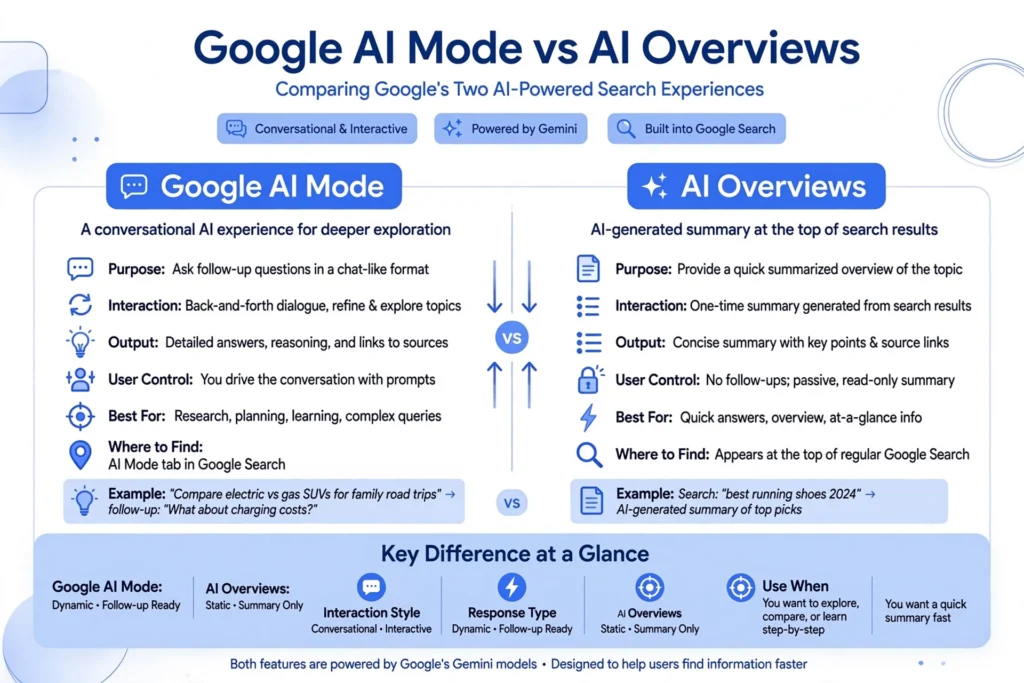
The biggest change is how the update works across Google’s ecosystem. When you publish a post, the system checks how relevant it is, suggests internal links, and points out missing topics—all without leaving the dashboard. Tools that once needed expensive third‑party services are now built into the platform billions trust.
In the fast‑growing markets of India and Pakistan, using the Google AI Mode Update is a must. The tools are ready, the data is local, and the chance to get higher rankings and more engagement has never been clearer.
What is Google AI Mode Update?
The Google AI Mode Update embeds cutting‑edge language models within the core search engine, allowing Google to understand queries and page content with a depth that resembles human comprehension. By processing the semantic relationships between words, the update can surface results that match not only the exact keywords but also the underlying intent behind a searcher’s question.
Because the same models power both the SERP algorithm and the content recommendation engine, Google AI Mode Update delivers a unified view of relevance across the entire ecosystem. Keyword analysis becomes more granular: the system can identify long‑tail variations, contextual synonyms, and emerging topics in real time, giving creators a clearer picture of what users are actually looking for.
SERP insights are also upgraded. Instead of relying solely on historical click‑through data, the update predicts how a new piece of content might perform based on its semantic similarity to top‑ranking pages. This predictive capability lets site owners prioritize topics that are likely to gain traction in the South Asian market, where language nuances and regional expressions play a significant role.
Content relevance is therefore no longer judged by superficial keyword density alone. The Google AI Mode Update evaluates how well a page satisfies the inferred user intent, rewarding comprehensive, well‑structured, and context‑aware writing. For bloggers and SEO professionals in Pakistan and India, this means that a strategically crafted article—rich in related concepts, backed by authoritative sources, and aligned with local vernacular—has a stronger chance of climbing the rankings and engaging readers.
In short, the update turns AI from a peripheral tool into the engine that drives search, recommendation, and optimization decisions across Google’s platform.
How Google AI Mode Update Helps Websites?
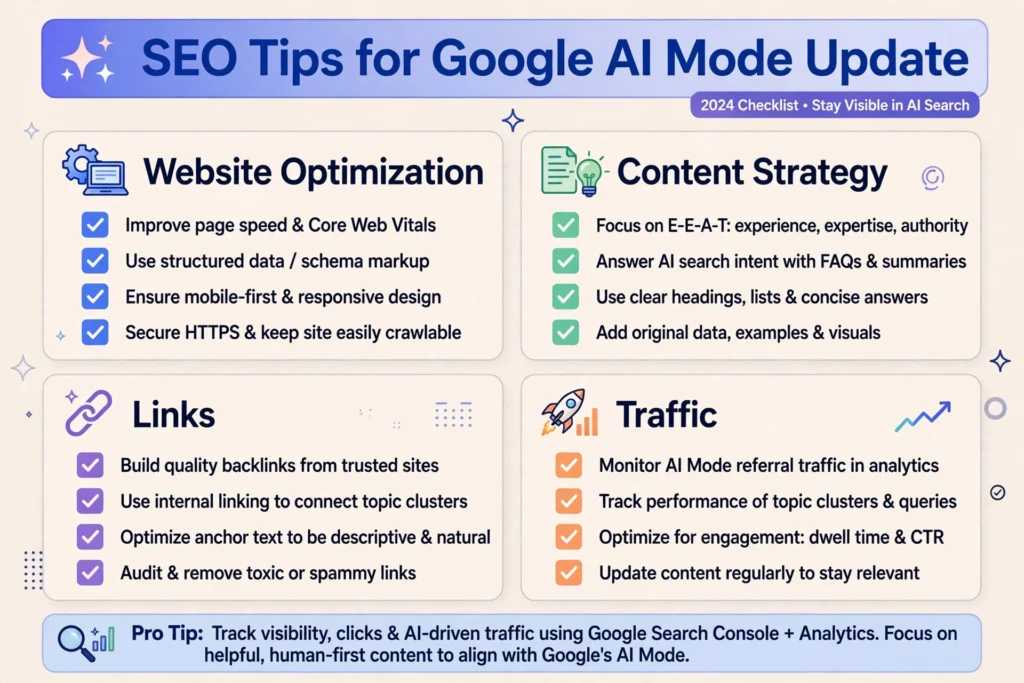
By using Google AI Mode Update, websites can automatically generate meta descriptions that match user intent. The AI scans the page’s headline, headings, and core content, then drafts concise snippets that incorporate high‑value keywords and answer the query most likely to bring a click. Because the suggestions are derived from the same language model that powers Google’s search results, the descriptions tend to align with the phrasing users actually type, increasing click‑through rates without manual copy‑editing.
The update also improves page load predictions. Google AI Mode Update analyzes resource size, server response times, and historical performance data to forecast how quickly a page will render on different devices and connection speeds. When the model detects potential slow‑downs, it delivers specific optimization recommendations: compress images, defer non‑critical JavaScript, or switch to a more efficient font format. These suggestions are presented directly in the dashboard, allowing webmasters to prioritize fixes that will have the greatest impact on Core Web Vitals.Link: https://www.dawn.com/news/google-boosts-news-and-link-visibility-in-ai-mode
Key benefits for South Asian sites include:
- Localized relevance – meta descriptions reflect regional terminology, improving relevance for Pakistani and Indian users.
- Time savings – automated copy generation reduces the hours spent crafting each snippet.
- Performance gains – predictive insights help teams address load issues before they affect rankings.
- Data‑driven decisions – the AI backs each recommendation with confidence scores, making it easier to justify changes to stakeholders.
Integrating these capabilities into your workflow turns routine SEO tasks into a single, AI‑guided process. By aligning meta text with user intent and fine‑tuning performance based on predictive analytics, you set the stage for higher visibility, lower bounce rates, and sustained organic growth.
What Should Bloggers Do After Google AI Mode Update?

Begin with a comprehensive audit of every article that already ranks. Export the current URL list, click‑through rates, and average dwell time from Search Console. Then feed each URL into the Google AI Mode Update interface. The tool returns a semantic score, identifies missing entities, and proposes LSI terms that align with local search intent in Pakistan and India. Prioritize pages with high traffic but low relevance scores, because a modest enrichment can lift rankings quickly.Link: https://blog.google/products/search/ai-mode-update-links-visibility/
Apply the suggested changes in three passes:
- Content depth – insert the recommended entities, answer related questions, and weave regional terminology that resonates with South Asian audiences.
- On‑page signals – update headings, alt text, and internal links using the AI‑generated keyword clusters.
- Meta elements – replace stale meta descriptions with AI‑crafted versions that match user intent while staying within the character limit.
After publishing, switch to the Google AI Mode Update dashboard. The real‑time view shows ranking fluctuations, impression share, and confidence levels for each recommendation. Set up custom alerts for drops below a predefined threshold, so you can react before traffic erodes.
Use these insights to refine your editorial calendar. If the AI highlights a surge in queries around “budget travel tips Delhi” or “home‑office tax deductions India,” schedule new posts or update existing ones to capture that momentum. Align publishing dates with seasonal peaks identified by the dashboard, and allocate resources to topics that promise the highest semantic lift. By turning audit findings into a data‑driven content roadmap, you keep the blog ahead of the algorithmic curve and maximize the benefits of the Google AI Mode Update.
Conclusion & FAQ
Embracing the Google AI Mode Update today positions your site to ride the next wave of search relevance in South Asia. By integrating AI‑driven keyword analysis, semantic enrichment suggestions, and performance‑focused insights, you can craft content that aligns with local intent while meeting Google’s technical standards. The early adopters in Pakistan and India who already sync their editorial calendars with the dashboard’s seasonal peaks are seeing quicker indexation, higher click‑through rates, and stronger dwell time—all signals that translate into sustained visibility. https://technoh8news.com/microsoft-offline-ai-pc-runs-120b-models-no/
The real advantage lies in treating the update as a continuous optimization engine rather than a one‑time tweak. Regularly audit meta descriptions, monitor AI‑generated performance recommendations, and feed the insights back into your content roadmap. When you combine these data‑backed actions with the cultural nuance of your audience, the Google AI Mode Update becomes a catalyst for both traffic growth and brand authority.
FAQ
What is Google AI Mode Update?
It is Google’s latest AI‑powered feature set that enhances search relevance and content creation, embedding advanced language models directly into search results and recommendation tools.Will Google AI Mode Update increase traffic?
When applied correctly, the update can boost organic traffic by improving rankings and user engagement, especially for sites that adopt its semantic and performance recommendations.
Takeaway: Start leveraging the Google AI Mode Update now, and let its AI‑driven insights steer your content strategy—this proactive approach will secure higher visibility and long‑term growth for your blog or website.